
Draw near to Allah only by those things that are established in the Sharī’a and the Prophetic example (sunna).
by tarek elgawhary
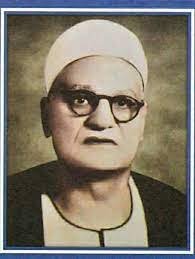
Bio of Shaykh ‘Abdul Fattāḥ al-Qāḍī
Shaykh ‘Abdul Fattāḥ al-Qāḍī was a Shādhilī Shaykh and adherent of the Shāf‘ī school of law. He was born on the 2nd of Safar 1317 (July 8, 1899) in the village of Shiblinga in the Qalūbiyya Governance in Egypt. He was a descendent of Prophet Muḥammad (Allah bless him and give him peace) and came from a pious family that was known for memorizing the Quran and teaching it to others.
Following in this tradition, al-Qāḍī memorized the Quran relatively quickly at a young age in the village kuttāb. He was known to spend his time in worship and contemplation, rather than playing with other children his age. Even though his father passed while he was very young, and very similar to the early years of Prophet Muḥammad (Allah bless him and give him peace), al-Qāḍī passed his time as a youth holding to his memorization, teaching other children the Qur’an, and personal worship.
As al-Qādī grew up in Shiblinga, he was prone more and more to devotional acts. For example, he was inspired to recite Surat al-Ikhlāṣ 12,000 times per day in addition to his daily prayers and night vigils. A practice he kept for several years. When he was 30 years old, he was inspired to transcribe the entire Quran, which he completed with Allah’s grace in 25 days. Upon finishing, al-Qāḍī was overwhelmed and contemplated that the Prophet (Allah bless him and give him peace) taught that whoever completes the Quran has an answered supplication. He prayed for the benefit of the entire Muslim community, and that Allah’s mercy descends on all of them. This hand written copy is kept in his mausoleum in Shiblinga and is brought out during special occasions so that all may benefit from its grace.
Throughout this early period, al-Qāḍī developed a special devotional and spiritual relationship with the Prophet (Allah bless him and give him peace). One of his friends Shaykh ‘Alī Fāyid gave him a hand written copy of Kunūz al-Asrār of the Moroccan Shādhilī, Shaykh ‘Abdulla al-Khayyāṭ Ibn Muḥammad al-Hārūshī (d. 1175/1761), which is a collection of famous prayers on the Holy Prophet (Allah bless him and give him peace) in four parts. Al-Qāḍī quickly transcribed the short book and immediately fell in love with these blessed invocations. He would recite the entire book several times a day for the rest of his life and said of them, “the fastest way to Allah is through the prayers of al-Hārūshī.”
Shaykh al-Qadi’s pious upbringing, coupled with his strong inclination for devotional acts led him to a three-year period of on and off sessions of spiritual seclusion (khalwa), which were given to him directly from Prophet Muḩammad (Allah bless him and give him peace). The first seclusion was for nine days when al-Qāḍī established his routine of fasting, strict dietary protocols, recitation of the Quran, recitation of Kunūz al-Asrār, and the invoking of Allah through His different names. His second seclusion was for 40 days during when, in addition to his routine, he wrote out the entire text of the creed of Imam al-Sanūsī (d. 895/1490), and the legal text of Abu Shujā‘ (d. 593/1197) in the Shāf‘ī school of law on a wooden plank used by students to commit texts to memory. He would thereafter recite the creed and fiqh texts as part of his daily invocations. His third seclusion was also for 40 days, followed by a seclusion of 90 days. His fifth and final seclusion was for one month.
Over this three-year period, al-Qāḍī’s’s popularity grew and word spread fast through the countryside of his saintly qualities. People came from near and far to seek his guidance, prayer, and instruction. In particular, Shaykh Muḥammad ‘Abd al-Wahhāb al-Huṣṣāfī (d. 1368/1949) heard of this and sent for al-Qāḍī to visit him in Damanhūr. During this visit, al-Huṣṣāfī gave al-Qāḍī formal permission (ijāza) with an unbroken chain (sanad) back to Prophet Muḥammad (Allah bless him and give him peace) to guide people according to the Shādhilī Sufi Way. While there was no disputing al-Qāḍī’s spiritual stature and saintliness, al-Huṣṣāfī emphasized that formal instruction and induction into the Sufi way must follow the protocol of formal permission as inherited from the pious ancestors (al-salaf al-ṣāliḥ).
While the main instruction of the Shādhilī way is to initiate students by teaching them the invocation of the supreme name (Allah), al-Qāḍī observed that people’s spiritual aspirations had dwindled significantly and that a middle step was needed to bring people back to the remembrance of Allah. He therefore would induct people by first using the seven foundational Divine Names (uṣūl) of ‘Abd al-Qādri Jilānī (d. 561/1166) and the six additional Divine Names (furū’) established by the later Shādhilīs. Part of his spiritual instruction was a great belief and respect for Prophet Muḥammad (Allah bless him and give him peace).
He used to recite the birth celebration (mawlid) of the Holy Prophet (Allah bless him and give him peace) of Shaykh al-Walīdī and emphasized in his lectures the importance of correct belief regarding the Prophet’s place and honor in the Islamic intellectual and spiritual paradigm. He also taught absolute adherence to the Sharī‘a as enshrined in the Sunnī schools of law and to hold to the practice and habits of Prophet Muḥammad (Allah bless him and give him peace) no matter what. He would encourage his students to adopt Sunna practices that people had forgotten as a way of reviving the Islamic moral tradition. Above all, he taught the importance of etiquette and that religion is nothing more than one’s conduct in public and private, and that proper etiquette is needed in all matters.
Although Shaykh al-Qāḍī did not leave much written material, his legacy has been in the hundreds of luminaries he left behind that have continued to impact the Muslim world and beyond. Of particular note are:
Dr. Ḥasan ‘Abbās Zakī (d. 2014) who was the keeper of Shaykh al-Qāḍī’s secret and the only one to receive written permission directly from Shaykh al-Qāḍī.
Shaykh ‘Abd al-Jalīl Qāsim (d. 1998) who is the compiler of al-Qāḍī’s teachings and his first successor.
Dr. ‘Abd al-Ḥalīm Maḥmūd (d. 1978), who served as Shaykh al-Azhar from 1973-78.
Dr. Ali Gomaa, the former Grand Mufti of Egypt
Shaykh ‘Abd al-Fattāḥ al-Qāḍī died on the 16th of Dhul Q‘ida 1383 (March 30, 1964) and is buried in Shiblinga.